In international trade, understanding Incoterms is essential for managing risk, cost, and responsibility across the supply chain. Among these terms, EXW (Ex Works) stands out as one of the most buyer-responsible Incoterms, making it a critical concept for importers working with global freight forwarders such as China Freight Hub.
As an experienced international freight forwarder, China Freight Hub specializes in handling complex logistics scenarios governed by different Incoterms. From EXW to DDP, our role is to help businesses clearly understand where responsibility begins and ends—then build a logistics solution that minimizes risk and maximizes efficiency.
When it comes to EXW shipments, China Freight Hub supports buyers by managing transportation, export coordination, customs documentation, and onward delivery. This allows importers to retain full control while avoiding common pitfalls associated with seller-limited responsibilities under EXW.
EXW (Ex Works) is an Incoterm in which the seller’s obligation is limited to making the goods available at their premises or another agreed location, such as a factory or warehouse. Once the goods are ready for pickup, all costs, risks, and responsibilities transfer to the buyer.
This Incoterm is often chosen by buyers who:
Want full control over logistics decisions
Have established freight forwarder relationships
Prefer to manage export procedures independently
While EXW offers maximum control, it also requires strong logistics coordination and local expertise—especially in the country of origin.
Under EXW, responsibilities are clearly divided:
Seller’s Responsibilities
Prepare the goods
Make them available at the agreed pickup location
Provide basic commercial documentation
Buyer’s Responsibilities
Arrange pickup and inland transportation
Handle export customs clearance
Manage international freight and insurance
Complete import customs clearance and final delivery
Bear all costs and risks from pickup onward
Because export clearance is not the seller’s obligation under EXW, buyers often rely on a local freight forwarder like China Freight Hub to manage compliance and avoid delays at origin.
Although EXW appears simple on paper, it can become operationally complex—particularly for overseas buyers unfamiliar with local export regulations. Partnering with China Freight Hub ensures that EXW shipments are handled correctly from the first pickup, reducing risk, delays, and hidden costs.
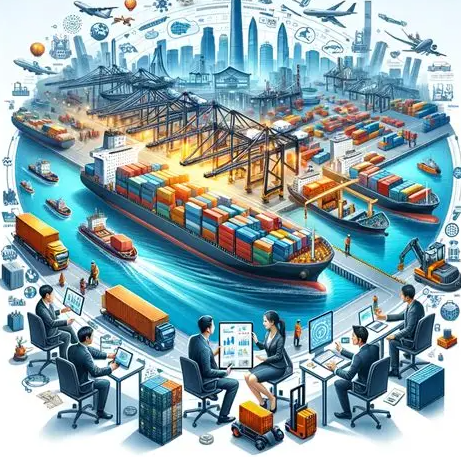
EXW plays a distinctive role in global trade by granting buyers maximum autonomy over logistics decisions. Under EXW, buyers control transportation, carrier selection, routing, and cost structure, making it a preferred option for companies with established supply chains or consolidation strategies.
However, this control comes with increased responsibility. Buyers must understand export regulations, local compliance requirements, and operational risks in the seller’s country—challenges that can be significant without local expertise or professional support.
Key Benefits
Full control over shipping and logistics decisions
Greater flexibility in carrier and route selection
Potential cost savings for experienced importers
Key Challenges
All logistics, compliance, and risk shift to the buyer
Requires deep knowledge of export procedures
Higher coordination complexity at origin
Understanding this balance is essential for companies considering EXW as part of their international trade strategy.
China Freight Hub adopts a structured, buyer-focused approach to EXW shipments, providing operational and regulatory support where sellers’ responsibilities end.
Expert Logistics Planning
Advising on optimal pickup methods, transport modes, and routing strategies to minimize cost and delay.
Local Regulatory Support
Assisting buyers with export documentation and compliance to ensure smooth clearance at origin.
By bridging the responsibility gap inherent in EXW, China Freight Hub enables buyers to retain control without absorbing unnecessary risk.
In one EXW transaction involving machinery exports from Shanghai to Germany, China Freight Hub supported the buyer by coordinating local pickup, export handling, and international transport.
Through local partner coordination and compliance guidance, the machinery was collected, cleared, and shipped without disruption—demonstrating how professional execution can turn EXW complexity into operational efficiency.
Selecting the right Incoterm is a strategic decision. EXW is often compared with FOB and CIF, each offering different risk and cost allocations.
Control & Responsibility
EXW places nearly all responsibility on the buyer, while FOB and CIF distribute obligations more evenly.
Cost Structure
EXW may reduce costs for buyers with strong logistics networks, whereas CIF includes freight and insurance arranged by the seller.
Buyers with established freight forwarders and local partners
Importers seeking full control over logistics and cost visibility
Shipments where origin coordination is manageable
EXW transactions shift both legal and financial responsibilities heavily toward the buyer.
Seller: Makes goods available at the agreed location
Buyer: Handles transport, export clearance, import procedures, and final delivery
All transportation, insurance, and customs costs fall on the buyer
Accurate budgeting is critical to avoid unexpected expenses
A clear understanding of these obligations is essential before choosing EXW.
While EXW offers flexibility, it introduces specific operational risks.
Coordinating pickup at the seller’s facility
Managing export compliance in a foreign jurisdiction
End-to-end logistics planning from origin to destination
Regulatory guidance to reduce compliance risk and delays
With professional support, EXW becomes a controllable, scalable shipping model rather than a liability.
Digital transformation has significantly improved how EXW shipments are managed.
Route optimization and shipment scheduling
Real-time communication among all parties
Real-time shipment tracking
Digital documentation for faster processing and transparency
Technology has become a critical enabler for efficient EXW execution.
Clients using EXW with China Freight Hub often highlight increased control and cost transparency as key advantages. While logistical responsibility is higher, professional support helps mitigate operational complexity and compliance risks.
These real-world experiences confirm that EXW works best when paired with an experienced freight forwarder.
Confirm goods readiness and pickup conditions with the seller
Plan transport, export clearance, and onward logistics in advance
Understand local export requirements
Work with reliable logistics partners
China Freight Hub supports buyers throughout this preparation phase to ensure smooth execution.
As global trade evolves, EXW continues to adapt.
Increased digitalization of logistics and documentation
Growing focus on sustainable and optimized transport solutions
Continuous investment in digital tools
Adoption of environmentally responsible logistics practices
By evolving with these trends, China Freight Hub remains a trusted partner for EXW shipments in modern global trade.
EXW offers unmatched control but demands professional execution. When supported by an experienced freight forwarder like China Freight Hub, EXW becomes a powerful tool for optimizing international logistics rather than a source of operational risk.